Memphis Memories and a Patriot’s Daughter

I’m a lifelong learner. I love digging through history to find people who inspire me…hearing about new dinosaur fossils being discovered around the world…reading poems, short stories, and novels that make me think and draw me into the story so deeply that I feel part of the author’s created world.

While reading some notes about some of the people buried in a historic cemetery in my area, I recently learned something about my own hometown. I did not know that Dorothea Spotswood “Dolly” Henry Winston, the daughter of Patrick and Dorothea Henry once lived in Memphis. She’s buried in Elmwood Cemetery, so you can visit her grave if you visit. She was born in Williamsburg, Virginia, on August 2, 1778, and died in Memphis, Tennessee, at age 75 on June 17, 1854, at the home of her daughter.

Though her father’s words are easy to find, I couldn’t find much information about her life outside of Virginia, but I decided to write a short story (historical fiction) that introduces you to a little bit of her story.

Liberty and Lunch

By Chris Pepple ©2026

I gathered my belongings and stepped onto the deck of the steamboat. The awe-inspiring monster I traveled on offered me a quick way to reach my daughter and her husband in Memphis as it billowed smoke as if a dragon deciding whether it would protect or devour me along the journey. As I felt the churning of the waves of the Mighty Mississippi lapping at the edge of the boat, I prayed daily to myself: Dear Lord, keep the fires of this dragon contained in its own boilers. Help us avoid the fires that have taken the lives of other travelers.

Here I was, a woman in my 70s, on a new adventure that I had not seen coming. I had eaten my breakfast this morning on this vessel, trying not to think about what was ahead. Now, as I stared at the bluffs and the shoreline I would soon reach, I closed my eyes and thought back to the place I thought I would spend my final days—Red Hill, Virginia. I could picture our modest main house with my father proudly walking in to greet his family. I could smell the flowers blooming, hear my siblings laughing, and feel the wind blowing through the Osage orange tree.

I opened my eyes and saw the reality of the cobblestones and mud on the banks before me. I could hear the workers preparing for us to disembark. So many were excited to be landing in this growing city, but I saw nothing before me that felt comforting.

“Are you Dolly?” I heard a voice behind me calling out.

“Excuse me?” Dolly? Who knows me here to call me by that name? I surely have no friend here yet.

“Sorry, Ma’am. Are you Mrs. Dorothea Henry Winston?”

“Yes,” I replied, feeling tired and wanting to find someone familiar.

“Your daughter left me instructions to assist you off the boat and up the hill to her husband’s waiting wagon.”

I nodded. Elvira and James had been so kind to me over the past few years. After George died twenty-one years ago, I felt a bit lost. Grief over his death and the loss of four of our children through the years seemed to be a constant companion. Now—well, another change loomed before me. I accepted the help off the steamboat, not wanting to slip on the cobblestones or fall off the planks and into the mud that seemed to prey on this landing as if one more layer would swallow it forever. Memphis—my new home with my daughter and her family.

“Dolly, you made it!” my son-in-law called out, being one who could call me Dolly. “I hope your trip went well.”

“So good to see you, James,” I replied as he reached for my bags. “I’ll hold on to this one. It has a few special items in it.” I held that all the way to the home Elvira and James had been preparing for us to live in. They arrived months earlier to have things ready. I entered the house and could feel the care they had both put into it, hoping it would begin to feel like home to me. I had been away from Virginia for years—moving with them to Alabama after George died—but had always hoped to make my way back there for my final days. This house would have to do instead.

“Mother, let’s invite a few ladies over for lunch,” Elvira said two weeks into my stay at our new house. “We could have some chicken or rabbit with biscuits and some okra or greens.”

“It’s time I became a bit more social, I suppose. If we do that, I’d like to use something special at the table. Wait while I get it.” I went to my room and pulled out the only unpacked bag I had left. I pulled out two cloths with items wrapped in them. I smiled as I held them in my hands.

I went back out to our dining table and placed the cloths before Elvira. “These should be with you now,” I said as I unwrapped the largest cloth. Elvira gasped as she saw the items before her—eight sterling silver shell-patterned pistol handled knives, with eight matching three-pronged forks, and eight spoons.

“Mother, where did you get these?” she asked as she ran her fingers over the knife handles, admiring the craftsmanship.

“I’ve had these for years. Brought them from Red Hill when I left. I just never unpacked them. They were part of a wedding gift from my mother and father, handed down from our family,” I answered, once again closing my eyes and thinking of my parents and our homes in Virginia.

“What’s in the other cloth?”

“A tea cup,” I said as I pulled out a small china cup with its high handle and pink flowers with shamrock green leaves. “This is still mine for now. It reminds me of both the fragility and the beauty in life.” I paused before adding, “I think I’ll rinse this and make myself some tea now.”

Three days later, I admired the silverware as we sat around the table with women of various ages who were dear to Elvira and would become dear to me—mothers and daughters facing this growing port city together.

“I feel like I’m sitting with royalty,” Mrs. Thompson said, looking in my direction. “Tell us more about your family. I’ve read about your father a bit.”

“Well, I certainly don’t feel like royalty. Our lives are all of equal importance. Our joys and sorrows are equally felt and shared.”

“But you’re the daughter of Patrick Henry. That name’s known through all of the states—a founding father and a Virginia governor.”

“To me he was simply ‘Father.’ My mother and my father taught me how to read and how to listen, how to find my true self and how to respect the lives of others. I grew up in a house full of love and full of a desire to learn. I suppose his life is that of an American patriot who will be talked about when people pen the history of our nation, but to me he’ll be remembered for all of our long walks and our evening talks.”

“You’re lucky to have been educated and given so many opportunities in life,” a young woman who was sitting near Elvira said. “I’ve been farming for so long that I can’t even remember the last time I walked into a school room or held a book in my hand. Tell me more about what’s happening in other parts of the country and the political discussions I hear when I’m at the general store.”

“I can do more than tell you,” I said as I pardoned myself from the table and went into my room. I came back with three books and some letters tied together with a ribbon. “Here are some of my father’s letters I kept that talk about all that he worked for in this nation—the Bill of Rights he wanted to ensure we all had. I also have a few books that might interest you. The letters can be read here, but you can borrow the books. I’m having even more shipped in soon.”

“Liberties and freedom—people are still arguing about that today. Who has which liberties and who is truly free,” Mrs. Thompson added. “I try to focus on more basic matters such as what our church families face and what food needs to be put on the table. Illness runs through this town so often. Focusing on freedom isn’t going to cure or feed any of us.”

The conversation continued about the importance of speaking out for the rights of all people in our growing nation while also working to feed our families and provide medical care for our communities.

The lunch turned into a weekly occurrence with new faces joining us each week. When the weather was nice, we picnicked out back. With the cold or rain, we filled every chair in the house and filled our tables with food from each family.

During one lunch more than a year later, I looked at our group and said, “My father once wrote, ‘My earnest wish is that Christian charity, forbearance and love may unite all different persuasions as brethren.’ I truly wish that as well. You have made me feel at home here, though I longed to be back in my family home in Virginia. You gave me a purpose and a hope through these lunches—that my father’s wish for all people to be respected in this nation will still be something others are willing to stand for today.”

Maybe Dorothea Spotswood “Dolly” Henry Winston started the Memphis tradition of gathering for book club discussions and creating space for diverse beliefs to share a meal and remember what her father hoped for.
American Dream 2025

I keep seeing so much about politics and projects planned for our nation after the next election. People are grasping for power as if power will bring them joy or peace. Power over people only leads to despair and an emptiness that creates a craving for even more power because what was sought after doesn’t lead to fulfillment of any type. Power with people is what brings a stronger nation full of potential and hope. Power with people opens doors for all people to bring their creativity and ideas to the table. This leads to new innovations for problems we all face. This leads to beauty filling art galleries and music halls. This leads to medical research that brings hope to those who suffer. This leads to hope for all people.

Here’s a dream for America in 2025:

I have a hope that the sayings expressed in the beatitudes are breathed into life here on earth in this nation. May the poor in spirit, those who mourn, and those who are meek find blessings here in this nation. May we all be bearers of hope and comfort and respect. May those who hunger and thirst for righteousness and those who are merciful and pure in heart see the fruits of their labor growing and strengthening this nation. May the peacemakers know their efforts have truly brought peace to a divided land. May those who are persecuted find healing as they continue their good works.

I have a hope that the vision of our founders comes true. I hope that the dreams of the Anglicans, Baptists, Catholics, Congregationalists, German Pietists, Lutherans, Methodists, Jews, Mennonites, Moravians, and Quakers come true as they worked to build a nation free from religious rule. I hope the example of those who walked this land together knowing that they could each practice their religious beliefs and that they would not be forced to follow the beliefs of others inspire us to seek the wisdom they saw in embracing religious diversity and allowing others to seek God or their own spiritual path as they journey in life.

I have a hope that we will truly define our nation by the freedom we grant to all people. We will not hoard freedom in our own circles as if it is a limited commodity. We will see that freeing all people only strengthens our nation because we are showing the world what true strength and power look like. It looks like people standing together and working together without pulling others down. It looks like a place where all people are safe and can embrace their own identities and live and work and play without fear of being judged. A free nation is a healthy nation. A land of freedom means hope for all people. A land of freedom means we can work together to create a strong economy and healthcare system for all people to then thrive rather than just fight to survive. Let freedom ring throughout all the land.

I have a hope that we will be a wise nation. I hope that we will wisely examine our own prejudices so we can address what holds us back from following the ideals of freedom and justice and mercy. I hope that we will seek answers to the healthcare crisis in our nation and to the financial failures moving through our land. I hope that we will listen to the voices at the table and be willing to learn from each other. No one has all the answers. Together, though, we can find a path forward that will offer hope and stability and safety and beauty to our land…to all people in our land. We will be life-long learners who embrace exploring scientific studies and fund research and honestly explore history seeking accuracy and finding the stories that have been buried behind myths and wishful thinking.

I have a hope that we will be willing to address the mental health crisis in our nation. We have become a land where violence and abuse and despair flow from our communities because we lack resources to help people find answers and find healing.

I have a hope that we will care for the weakest in our land…that we will build communities that don’t take away from the strength of others but that do care for those people whose disabilities limit how they can care for themselves. I hope we care for those in need of medical resources. I hope we care for those who are lonely or scared or facing dementia and Alzheimer’s.

I have a hope that we will learn to care for this beautiful land we call home so the land can thrive as much as we can. I have a hope that we will keep our waters clean and our air pure. I have a hope that our parks will thrive and our natural lands be nurtured. I have a hope that our animals in this land will be treated with respect and cared for as part of our communities. We will fund our shelters and care for those pets who need to be re-homed. I have a hope that we are never the reason for the extinction of any species.

I have a hope that love wins and that everyone sees the beauty in that statement.

I have a hope that we work with other nations to bring global stability without the need for war. I have a hope that we help stop the need for killing so we can claim a power that is only fleeting anyway. I have a hope that we will help bring freedom and stability to other nations so that our world can be a place where hate and hurting stops, where peace and hope flow, and where all people of all identities and all genders and all races and all nationalities and all ages and all sizes and all levels of abilities are respected and granted access to resources needed to live out their days safely and surrounded by love.

What I know is possible…we can end gun violence. We can end domestic violence. We can work through and end prejudices. We can bring healing to those struggling physically and emotionally and mentally. We can stand together to build safer communities where racism is no longer real. We can offer equal rights to the entire LGBTQ+ community. We can create safe communities, including schools and hospitals and offices, for all transgender people. We can be stronger together.

Keep the hope alive in 2025.

Losing our country one child at a time..

Losing Our Nation One Child at a Time

America, our wounded land,

where children’s blood runs free

when shooters take their lives away

hiding behind guns so cowardly

America, our wounded land, 

where store clerks and teachers bravely

walk in each day as front-line warriors

while others declare guns make them free

America, our wounded land, 

God shed God’s tears for thee

and weeps for the good 

that is becoming harder to see

America, our wounded land, 

where voices are raised for change immediately

and wise ones know more tears will come

because America is losing her dignity

America, our wounded land, 

where whiners declare their rights selfishly

but the Black and the gay and the “other than me”

are targets for hate and can no longer be free

America, our wounded land, 

I truly grieve for thee…

—Chris Pepple ©2022

The Circle of Words

We protest in this nation because it makes us stronger. . . We voice our hurts. We point out injustices. If we didn’t, we wouldn’t be a democracy with a document that calls for us to hear each other, to work together to be strong in our diversity. When women were left out of the conversation and the voting process, people protested (some peacefully and some violently). Now women can vote, own property, and hold political office. When prohibition was debated, people on both sides voiced their opinions strongly. Many businessmen broke the law and served alcohol even when it was prohibited. Eventually the law banning the sale of alcohol was overturned. We fought to end slavery and are still fighting to end serious injustices plaguing our nation such as unnecessary brutality, child abuse, domestic violence, rape, sexual predators pursuing children and the cover ups of all of these crimes to protect those with power, wealth or influence.

I’m a history geek, a listener, and a life-long learner. I want to know where we came from—honestly, not just a cute story that makes us look good. I want to understand people and their perspectives. I take public transportation and listen on subways and buses. When I am at the store, I listen to people on the aisles with me. I listen to people sitting near me at public events. I tune in to podcasts on subjects I had never thought about before and read editorials from opposing viewpoints. I want to hear people so I can understand things from their lives and their experiences. That’s the only way I can write from the perspective of different characters, and the only way I can be in conversation with others in my daily life—people in my neighborhood, my community, my city, my state, my nation, and my larger global family.

Here’s what I hear from many acquaintances right now: “I’m angry because I love this country and someone else won’t stand for the anthem of my homeland.” You are hurt because something meaningful to you is not being respected. You are angry because your values and traditions are not being upheld by others. It’s easy to feel personally threatened by these actions because your values are a part of who you are. You have the right to be proud of this nation, it’s flag, and your own religious beliefs that you tie into your patriotism. You have used your right to call protestors SOBs and other names. You have called for them to be fired, signed petitions to force them to stand, etc.

But your words have come full circle, so you must hear your own voices: We are a strong nation because we can express our opinions and hold our own beliefs. You can call someone an SOB who disagrees with you. Oh, but wait, can’t they express their beliefs? Isn’t that what our Constitution says? If you can ask people to stand, can’t someone else ask others to kneel?

I hear some protestors say they are kneeling because this country has not protected the lives of their brothers and sisters, their cousins, their friends, their mothers and fathers. A deaf man was shot at his house with neighbors yelling that he was deaf. A man was shot for complying with the law and acknowledging he had a legally concealed weapon. An autistic man was shot for not understanding the instructions. Men with their hands up were shot. Teens were shot by police as they legally drove away from a party to head home. They had no weapons and were not drunk or high or in a stolen car. They were just going home to respect the values their parents taught them about leaving a place if you felt uncomfortable with what was going on. An innocent man was killed when the police burst into the wrong home because of their own error. The protestors are hurting and protesting out of their hurts and over these injustices. It’s their legal right as an American to find a way to shed light on social issues that are keeping us from truly being a nation where all people are free.

You are using your constitutional right to voice your opinion that you want the anthem respected. They are peacefully using their constitutional right to ask you to hear them. It’s a peaceful protest—a cry to this nation to try to find a solution to this crisis.

It’s what we do because we are Americans. We protest. We speak out. We cry out to others to hear us. On taxation issues. On women’s rights. On prohibition. On repealing prohibition. On the rights of children to be educated. On gun rights. On gun limits. On the rights of all people to be treated with respect. About the rights of all people to be safe in this nation, to be equal under the law and to be treated justly.

This will not be our last issue to protest. We are a nation of fallible humans who will keep hurting others as we try to force others to live by our own traditions and political and religious beliefs. We will cause harm. Someone will find their voice and bravely stand up for those being harmed. Someone will find the courage to hear and join the chorus calling for love and justice to prevail.

It’s what we do. It’s called growth, and it make us stronger when we listen and join the conversation. You can be heard and still hear others. You don’t lose your rights when you give rights to other. You don’t lose your nation—you watch it come to life even stronger than before.

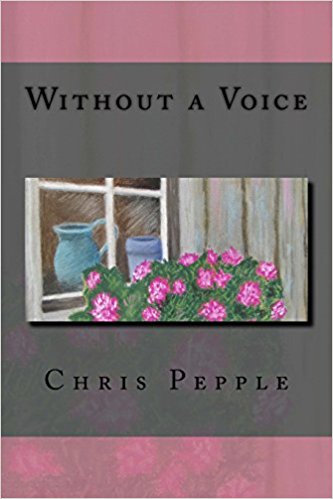
Tennessee author Chris Pepple announces release of Without a Voice

Chris Pepple, published author from Germantown, Tenn., announces the release of her fifth book, Without a Voice. WITHOUT A VOICE takes you on a journey across three states in the 1840s, traveling with Sarah and her daughters as they learn about their own strengths and abilities, and as they discover a new life with family and friends.

Sarah’s younger brother knows that she hides a secret, and he wants to help her break free from the pain she is hiding from others. Sarah wonders, though, if she is courageous enough to break the chains that tie her to a life of suffering and sorrow. She fears that she is not strong enough to care for her two young daughters alone.

“Writing this book has been a very meaningful experience for me,” says Pepple. “I was honored to have these characters share their voices with me and allow me to write them down for you. These voices are part of a larger story—the story of the voices that can’t share the hurts and fears that are hidden behind closed doors. There are so many hardships that people never know how to discuss. I hope this book opens the door for some healing conversations to take place.

“Writing Without a Voice changed my life because I was finally able to share the voice of so many women I know who have lived without a chance to tell their stories. I also found my own voice with this book. Of course, this book is 100% fictional, so no one person’s story makes up Without a Voice; no one character represents one person.

“Well, there is one historical character—I love to uncover stories from the past that I have never heard before. When my own daughter became interested in developing her artistic talents, I decided to research the lives of early American artists. I ran across the works of George Caleb Bingham and decided to weave him into this story. His paintings told the story of so many people from his time, so I wanted him to help me tell this story. Besides being a painter who really lived in Arrow Rock, Missouri, the other parts of his life were fictionalized to fit this work. But I challenge you to look up his works and to visit the actual town of Arrow Rock. You might be surprised by what you find.”

When asked about Without a Voice compared to her previous works, Pepple responded, “I really grew as an author when writing this book. I listened to my characters more and let them guide me. I was also less timid as a writer with this book.”

“There are moments in life that define us, set us on a new course that we had never even dreamed of. Sometimes those moments begin when an unexpected person finds their voice. Sometimes it begins when we decide to listen.” (Chapter 1)


voice book cover 1

Chris Pepple is a motivational speaker, published author, and freelance writer with articles regularly appearing in national and international publications. She has five published books, including a book she uses in her writing classes for children and teens. She has a writing degree from the University of Memphis and a master’s degree from Emory University. She lives in Tennessee with her two daughters. www.chrispepple.com