Shifting the Bowl

I write this story in 2006 after watching friends face losses in their families and after I faced losses in my own life. Grief comes to each of us in so many different ways. Sometimes the grief is hard to process immediately because of the shock of the death or because we face challenges in handling the financial affairs of the family member or the details in planning a memorial service. Often we are also trying to “hold it together” so we can let other families members lean on us in their grief. Once we have begun to recognize and process our grief, however, some memories come to us with sweet reminders of the person. We can remember them without the depth of pain that we once felt we were drowning in. We may still be hit with those waves of grief from time to time throughout life, but we can also cherish the sweet memories that stay with us and remind us of the joyful moments we spent with our friends or family members in the past. This was originally published in my first book of short stories, Look to See Me: A Collection of Reflections.

“Shifting the Bowl”

A Short Story by Chris Pepple ©2006

         I shifted the bowl on my coffee table so I could dust and get ready for the evening.  Six couples from my husband’s new firm were coming by for dessert and I knew they would come down and watch TV.  I had three hours left to get the pies ready and eat a light dinner. Really that was plenty of time, but I felt frustrated by the way the afternoon was going.  I always put so much pressure on myself to get things perfect.  Plus, I really wasn’t thrilled with the idea of having company. 

            Daniel wasn’t thinking the way I think when he invited them over. I thought we still needed to finish unpacking boxes and hanging pictures before we even thought of entertaining anyone. But he seemed excited about the idea, so I went along. I know he wants to make a good impression on his new co-workers and their families. I also know that he was both nervous and excited about this move for us, so he considered guests a good way for us both to feel a part of this place. He felt a little guilty about taking me away from so many friends, so inviting some women into the home gave him hope that I would bond with one or two of them.

            I swished my dust rag across the table and knocked over the bowl and the golf magazines beside it.  Maybe I should just put this bowl away or find a place for it in the guest bedroom.  It didn’t seem to go with the décor of an entertainment room.  I desperately needed to work on the color scheme in the room. I headed upstairs with the bowl, but I had to stop and answer the phone on the way.  I grabbed the cordless and kept walking.

            “Hey, Dad.  How’s your day going?” I asked as I grabbed a couple of towels to take up with me.  I enjoyed chatting with my father on most days, so I thought his call would be a nice accompaniment to my chores. I stopped in the middle of the staircase when I realized he was crying, however.  “Dad, what is it?” I asked even though I didn’t feel prepared to know. If he was crying, the news must be hard to handle. My father was the rock in our family. He held me when I cried, but he rarely cried in front of me.

            “Your Mom’s here at the hospital.  I had to call the ambulance.  I just didn’t know what else to do. I’ve never seen her like this. She…” his voice drifted away for a moment. “Oh, the doctor’s here.  Wait, your brother just walked in, too.  I’ll have him call you back. Pray, Sweetheart.”

            Before I could respond, I heard a dial tone. I couldn’t move from my spot on the stairs.  I needed more information. I needed him back on the line with details. I needed him to say, “I’m sure she will be fine.” More than anything I needed to hear my mother’s voice. I wanted her to tell me she would be fine. I sat on the steps and breathed deeply as I hugged the bowl and towels close to me. My prayers for my mother flowed through me with each breath, prayers for her healing, for her comfort and for her voice to be on the line with the next call.

            I wondered what to do next.  I tried to call Daniel at the office, but the receptionist said he had gone to a meeting. He didn’t answer his cell, so I left a message for him to call back.  In frustration, I dialed my brother’s cell phone. No answer there either. I shouldn’t have even tried when he was talking to the doctor, but I felt helpless in the moment.

             I knew Ben would call me soon. My brother carried the same strength as my father. He would assess the situation, and then he would call me with his formal big brother voice to let me know that he was handling the details. After a few minutes on the phone, his tone would change to let me know he was my protective big brother who would help make things better and would keep me updated. Before we ended the call, he would say something ridiculously funny to make me smile and put me at ease.

            No need to start driving to Vicksburg until he called to let me know if Mom and Dad needed me there.  I should be wise and just stay put until I had news. After all, there was no need for panic. Maybe Mom’s problem was just a mild reaction to her new medicine. Or maybe Dad just overreacted. He usually didn’t, but then again he could be really overprotective of Mom at times, especially as they had aged.  My Dad never wavered in his love for my mother and for all of us in his family. He could have been worried about her and wanted to have her checked rather than let a pain or a minor problem blossom into something bigger.

            An incoming reminder on my cell phone brought my mind back to my tasks at hand. I finally forced myself to continue up the stairs as I waited for my brother’s call. At the top of the staircase, I paused at my desk to check my cell phone to see if anyone had called on that.  While I waited for either phone to ring, I pretended to try to find the perfect spot for the bowl, but tears flooded my eyes.  I had to weep at the sound of hearing my father weep. I had to weep at the thought of my mother being seriously ill.  Logically, I knew my parents were older and not in the best of health, but emotionally I still felt as attached to them as I did during my childhood days when we spent every Saturday evening together playing games and then preparing for Sunday worship. I wasn’t ready to picture them any other way. 

            I went to my room and set the bowl on my nightstand. As I looked at it, I could picture my mother’s hands holding it.  She carried that bowl to our kitchen table many times. Mom used it as a fruit bowl.  That memory brought her voice flooding back through my mind.

            “Beth, come in here and set the table!” she would call to me as I tried to sneak out the back door to see if any of my friends were coming up the sidewalk.  “Beth, get back in here, Dear. You know dinner will be ready soon. I could use a hand for a minute.” My mother should not have had to ask for my help as much as she did. Instead, I should have been more of a willing volunteer. But through my pre-teen and teen years, I thought I had so much more important things to do. I wanted to be like Mary Alice Walker who had the newest clothes, the ones I had only seen in magazines that hadn’t made their way to our smaller stores. And she had much more freedom than I did. I envied her walking through the neighborhood to socialize as she pleased. Her mother hired people to help with meals. I was obligated to help with ours.

            I remember walking into the kitchen noticing that Mom had the bowl full of fresh apples and oranges each evening.  She kept two bananas stretched around each side. They were never browning or overly ripe as mine in our home often are. Mom arranged the bowl as carefully as someone else would a centerpiece of flowers. She could always turn the simple into something beautiful.

            If I tried to reach for an apple before the meal was served, Mom would laugh as she swatted my hand.  “I know tuna isn’t your favorite, but your Dad loves it, and you are not going to ruin your dinner with an apple, young lady.”  Mom knew that I dreaded tuna night in our house. Whenever I smelled it cooking, I tried every excuse not to eat it. I knew that Mary Alice Walked would never eat a meal that consisted of tuna.

            “Will you call your father and your brothers in for dinner?” my mother would always ask. If he was home, my father was always easy to find. He relaxed in his chair each evening when he got in from work. Sometimes he watched television. Other times, he read his favorite books. I could tell he had had a hard day at work if I came to get him and found him asleep. If he was napping in his chair, I wouldn’t wake him until I found my brothers.

            Ben was the second easiest to find. He would be in his room studying. He knew he wanted to be a veterinarian and knew he needed to get a scholarship to accomplish that goal. He kept his nose in a book and his mind focused on the subject before him. When I knocked on his door each evening, he would always answer, “Thanks for telling me. I’ll be down as soon as I finish this one page.” He never actually came until Dad called up to him to tell him he was holding up our prayer before the meal.

            Austin was harder to find. I usually had to go outside to track him down unless Mom found out he had a test and was making him study in his room. He did his best, however, to keep her from finding out when assignments were due and tests were scheduled. To find him when he was out of the house, I just had to listen for voices in the neighborhood. If guys were yelling about a great throw or a good catch, Austin would be there. He played both football and baseball well. If no talk of sports could be heard, then I had to listen for girls chattering about upcoming dances or parties. There I could find the boys leaning over a fence eyeing the girls and daydreaming about who would be dancing with whom. Of course, none of the guys had the nerve to actually ask any of the girls to dance. But my brother and his friends sure looked cool leaning back on the fence and grinning as if they were the Fonz himself.

            Once I rounded everybody up and we gathered at the table, we all prayed and then listened to Dad tell about his day as we ate.  I loved his tales of who did what in town. As sheriff, Dad knew everybody.  He never revealed personal secrets—things he learned on late night calls to houses where the families would be gossiped about the next morning—but Dad sure could tell about interesting things that happened throughout the day. After dinner, Dad grabbed a banana for his dessert. I grabbed an apple to keep from starving since I hid most of my tuna under half of my roll.  I helped Mom clear the table of everything except the wooden bowl.  That stayed there until the fruit was gone. Then Mom would shift it to the counter until she could refill it. 

            I can still remember my grandmother using the bowl, too. She mixed her biscuit dough in it.  As a young child, when I stayed at her house I loved waking up to the smell of breakfast cooking. I always snuggled under the quilt she had made, and I stayed there until she called me. Then I would quickly slip on my clothes and head to her kitchen.  By the time I got there, the bacon and eggs would be cooking.  The biscuit dough would be mixed, and I would help her roll it out and cut the circles using an old jelly jar.  I set the table while they cooked. We ate them with the fresh molasses that the neighbors always sent over.  My grandfather would head off to work after breakfast. My grandmother and I would clean the kitchen. 

            As we cleaned, my grandmother told me stories of her life growing up on a farm. I enjoyed the tales of her early childhood. She knew how to make the dough for bread by the time she was five. By age seven, she helped regularly in the garden. She pulled weeds and planted seeds. She dug for potatoes and picked beans, crawled around for red strawberries and reached high for plump figs. She rode to school on the back of her brother’s horse, holding a warm potato in the winter to keep warm.

Her mother sang to the family every morning while breakfast was cooking and morning chores were being completed. In the evenings, her father read to the family from books borrowed from the small library donated by a former teacher who passed away without any living relatives. The current teacher built bookcases in the back of the school to hold the collection of classics in American and world literature.

            My grandmother claims to have rarely gotten in trouble, remembering herself as a quiet child. Her brother, however, remembers one time when she angered their mother and was punished by their father. One day she saw a bird struggling to build a nest. She watched as it flew from place to place gathering twigs and bits of fluff from plants. The bird even found an old string tossed by her father when mending a broom for her mother.

My grandmother felt sorry for the birds once she realized how hard they had to work to prepare even the simplest of homes. She snuck into the house and made her way to the kitchen. She hoped to find old rags to cut and leave for the birds to line their nests with. As she moved through the kitchen, however, she spotted perfectly designed nests already built and ready to be lined. She had spotted her mother’s wooden bowls.

            My grandmother’s tender heart for animals gave her no option. She had to use at least some of the bowls for the poor birds struggling to make homes. She grabbed two and headed straight for the tree by the back fence. She could climb on the rails and reach the lower branches just enough to secure the bowls in place. She added the shreds of a dishtowel she cut with her father’s hunting knife left on the back porch. She felt pleased with her accomplishment until her mother began trying to prepare for the next meal. After searching the house, she called each child in for questioning. Needless to say, my grandmother was not a good liar. She turned herself in, retrieved the bowls, and accepted her punishment.

            I can still her telling me that as we ate together before washing the breakfast dishes. After she washed the wooden bowl after our meal, my grandmother would put it back on the counter.  Later in the morning, I would find my grandmother kneading dough in the bowl before leaving it to rise for bread for dinner.  I would find a smaller bowl and pretend to knead my own dough and get it ready for a meal with my dolls.  But no other bowl I used during my lifetime seemed to hold as many memories as this wooden bowl I now held. 

            My mother gave me this bowl when we moved into our new house last month.  She knew that bowl held a lot of memories, and she wanted me to have it.  Now I wondered if she knew that her time with me was short.  Did she know this day was coming when memories would be all I had to hold on to? 

            The ringing of my phone pulled me back to the present.  “Ben, how’s Mom?” I asked.  He told me that she had suffered a pretty serious heart attack.  She was hanging on, but I needed to come.  I rang Daniel and he answered this time.  He told me not to leave until he got home so he could drive me down.  I reminded him to tell someone to spread the word around so no one would show up at our house tonight. 

            I was ready when he came to pick me up.  I had packed a bag in case we needed to stay a couple of days.  I rang my daughter and told her what was going on.  I wanted to hug her right then, but I knew I had to head to Mom instead. 

            As we drove to Vicksburg, I prayed along the way.  I also let memories of Mom wash over me.  I dozed for a moment then heard my cell phone ring.  It was my daughter just checking with me.  She had gone by the house just to be there.  She said she didn’t feel much like being in the dorm right then. I knew she would put in a movie and stay up waiting to hear back from me.  If she found the wooden bowl, she would probably fill it with popcorn, salted and lightly buttered just the way we both liked it.

            One day it would be hers. I could picture her hands holding the bowl and talking with her own children. Maybe when they picked it up, they would feel my grandmother’s and my mother’s hands touching theirs for just one moment. I kept that thought with me as I caressed my mother’s hands in the hospital and tried to find a way to begin to say good-bye. How could it be her time to leave this earth already? I felt unprepared for my journey in life to continue without her voice and her physical presence as part of my routine.            

            The time came without my permission. The day after my mother’s funeral, I shifted the wooden bowl to the center of my kitchen table.  I filled it with freshly baked blueberry muffins. I needed to stay busy using my hands in the kitchen. When I saw the bowl, I saw my mother’s and my grandmother’s hands reaching out to me with love. I smiled as my son grabbed a muffin and whisked by me on his way to catch a movie with friends.  A new memory for an old wooden bowl. 

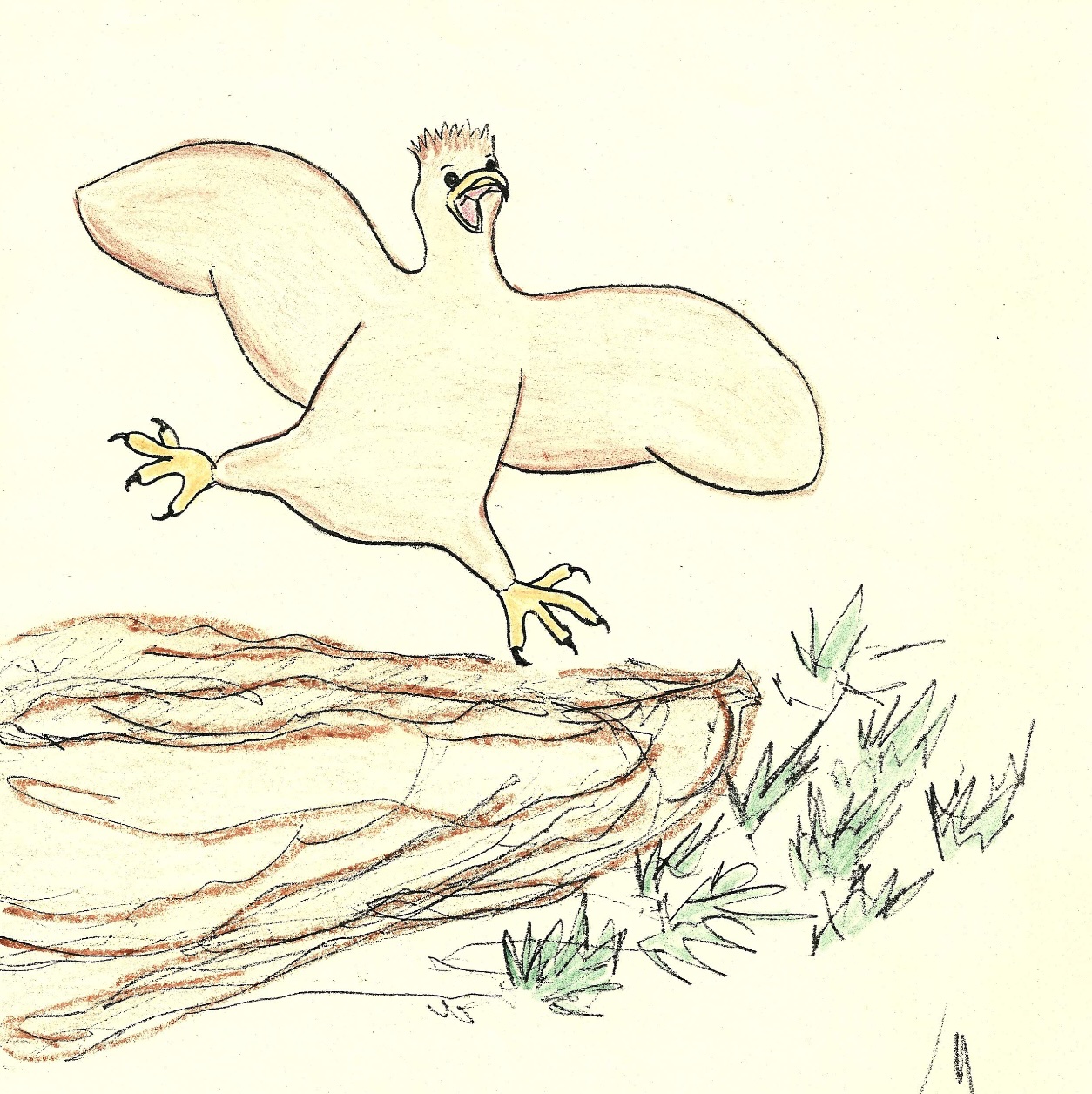
Elly the Eagle

A free children’s story about not giving up and about lifting up others as we grow.

Elly’s Flight

by Chris Pepple © 1992

Screenshot

            Elly felt a gentle breeze blowing across her feathers. She slowly opened her eyes to see the sun peeking over the tips of the mountains.

            “Good morning, my baby,” Elly heard her mother say.

“Baby!” Elly swackled as she stretched and turned to face her mother. “I’m not a baby. I’m Elly the Eagle, and today I’m going to fly!”

Mom shook her head in disbelief. She didn’t think Elly was quite ready to leave the nest yet, but Elly jousted out her favorite song:

            I’m Elly the Eagle

            And I’m gonna fly—

            I’ll be as high

            As a bug in the sky!

“Silly, Elly,” Mom chuckled, “bugs aren’t as high as eagles in the sky. Now you just wait here until I come back.”

Elly watched as Mom soared out of the nest and over the tops of the trees. Soon Mom was out of sight. Elly wondered what else was out of sight. Elly got excited just thinking about it. She thought out loud:

I’m Elly the Eagle

            And I’m gonna fly—

            I’ll be as high

            As a bug in the sky!

            When I fly

            I’m gonna see

            What it looks like

            From the top of the tree

            I’ll see people and dogs

            And maybe even deer

            And I will fly high

                        Without any fear!

                        I’ll fly over lakes,

                        Rivers and streams,

                        How long have I waited?

                        Forever, it seems!

Elly got so excited that she jumped out of the nest without even thinking and hopped over to the edge of the ledge. With one mighty jump, she leaped into the air. For one moment, Elly thought she was flying. Then she realized she was falling.

I thought I could fly

            But this is a fall

            I’ll go SPLAT

            And that will be all!

            HEEEELLLLLPPPP!!!

And Elly fell farther and farther and farther.

Suddenly, Mom appeared out of the clouds. She glided under Elly and caught Elly on her wings. Elly held on tight as Mom soared upwards then landed beside the nest. She told Elly how badly she could have been hurt.

Then she added, “Don’t worry, Elly. One day, you will grow. One day, you will fly.”

And Mom was right. Day after day, Elly practiced stretching her wings. Soon she practiced flying. Day after day, Mom had to catch Elly on her wings. But one day Elly flew on her own. She soared above the tips of the mountains. She glided over tops of trees. She floated over rivers and lakes and streams.

Finally, Elly rested on the soft green grass of a field. She laughed out loud and said:

I’m Elly the Eagle

And I’m gonna fl

I’ll be as high

            As a bug in the sky!

Then she heard a voice. “Silly Elly, bugs aren’t as high as eagles in the sky.”

Elly looked down and saw a little beetle glaring up at her. She wondered why he wouldn’t fly as high as she could. He said he had to stay close to the ground. “That’s just the way things are.”

“No way!” cried Elly. “Just climb on, and I’ll show you—that’s not the way things have to be!”

The beetle was curious, so he climbed onto Elly’s wings. Suddenly both were soaring over the tips of mountains and gliding over the tops of trees.

            I’m Elly the Eagle

            And I can fly—

            Now I’m as high

            As a bug in the sky!

Knowing and Unknowing

There’s a moment

just before sunset

when I think of people I know

who might also think of me

at the end of a day

and remember something sentimental

about moments we shared together

but then I watch the dusk turn to dark

and see the stars appear above me

and think of the unknown they

are existing in trillions of miles away

from this speck in space that I call home

and I think of all the unknowns in life

 and I think of all the unknowns within me

and I wish that people who saw my sorrows

from old scars and new grief also knew my joys

from three-hour conversations with women

who know how to laugh and heal and

sit with their own power to small brunches

with books and family photos shared

and those who knew my joys also

knew how cherished they were

because of the scars I hide from

all who try to draw near

and I wish people knew

how to unknow all about me

that they got wrong when

they interpreted my life

through the lens of their own

experiences while retreating to

their own comfort zones

and I wish they could see

the stars shine on me now

even though some know my faults

better than they ever knew my strengths

and I keep a distance from most people

because of the scars from the ones

who hurt me the most without ever

saying they were sorry

and I let people catch glimpses of me

just as these stars are peeking through

their own places in the night sky

but I let no one close enough to

see what makes me uniquely me

and I let words be my best friends

as a poet does and I share my soul

with the pages before me

and forget that I was

wishing upon a star

that I might be known by some

or forgotten by others

or remembered

with love

or seen

as me

—Chris Pepple c2025

Fruits of My Labor

Fruits of My Labor

I remember the first time

I baptized my soul

with the juice from 

the freshly picked blackberry 

that covered my tongue 

when my teeth broke 

through its flesh

and pulled the druplets

away from the whole…

I followed the new awareness

of the delight of the fruit before me

with the sweetness of a plum 

grown on my own land

against all odds as I 

learned to nurture the soil

and tame the tangle of weeds

that tried to devour my progress

and frustrate my soul 

as I worked to bring life

to what was buried beneath 

an almost unforgiving neglect 

of what should have been 

cherished as home 

and could still be 

the holder of hope,

and I remembered the witness

of those who taught me

to survive and to love

the feel of dirt moving 

through my hands

as I worked to understand

what I would devour

and what would try 

to devour me…

—Chris Pepple ©2022

A Sensory Sensitive Christmas

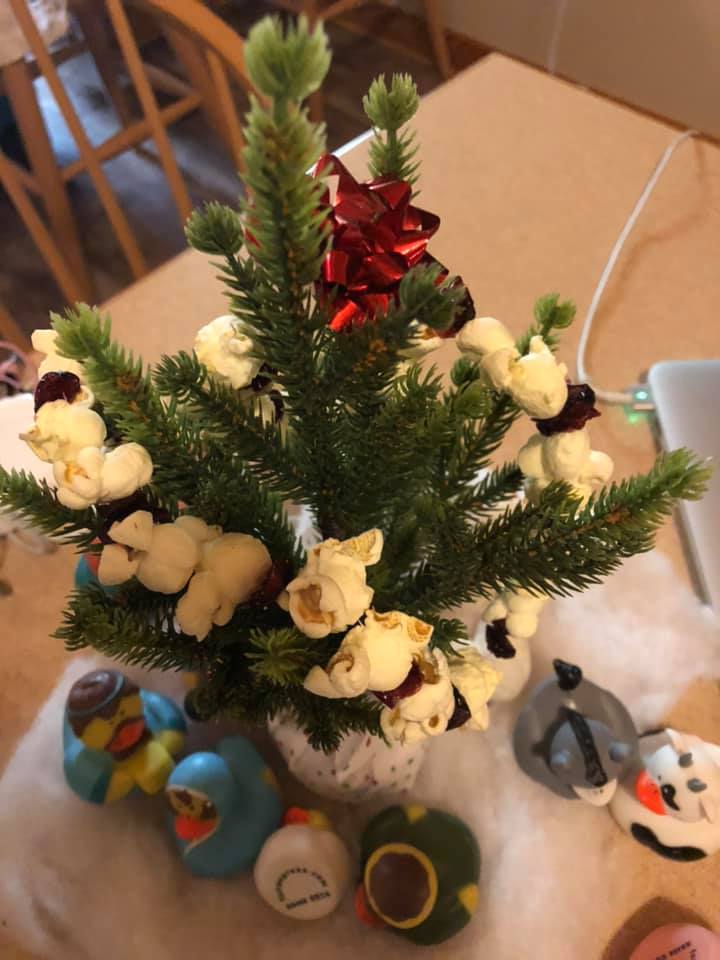
Christmas tree

Both of my children have always struggled with sensory issues. It’s a hard topic to talk about, even with people who care about you. It seems that our culture values the norm and wants everyone to fit into an easily understood category. When you don’t fit into the boxes created by others, however, life can be more stressful than it has to be. We often ignore our own needs to try to please others. We try to fit into the boxes so others are comfortable. But in doing so, we often neglect our own needs.

I often struggled with how to help my children “fit in” with the expectations of others. I tried to teach them how to handle the stresses that come with holidays and social events and expectations and busy schedules. Until recently, I didn’t realize that I was taking the wrong approach. I tried to help them fit into the preconstructed boxes that I thought we all had to fit into. I was raised to conform and please others. I’ve come a long way in unlearning that, however. Now I’m a box builder.

This year for Christmas, my children and I designed our own holiday. So far it has been the best Christmas we have ever had together. What was different? We left all expectations behind and sought out peace and joy. We packed our bags and headed to a quiet cabin with our dogs. We brought along a few Christmas gifts and some craft projects. I brought my writing pads and pens.

We have given ourselves the gift of quiet and the gift of taking care of our own needs. We came to a place where our senses wouldn’t be overwhelmed with noise and rushing and pressure to eat what others asked us to taste and laugh at what others considered funny. We haven’t had to smile and pretend to be happy. We are happy. This fits us. It heals us. It grounds us so we can go back and face our jobs and school schedules.

It’s so quiet here. I can see the sun glistening off of the ripples in the lake. I hear squirrels  playing in the trees near the cabin. This morning I watched deer watch me as I stepped out front to greet the day. I watched them parading through the woods for their own Christmas celebration. We dined on casseroles we created when we got hungry. We ate on our own schedule. The best part of day has been choosing our own activities–choosing what felt right for us. One child has napped and built with Legos. Another is trying to learn to needlepoint and has journaled a bit. I’ve enjoyed just watching them…reading some…writing some…being lazy with my dogs nearby. We strung popcorn and cranberries last night. We watched part of Christmas in Connecticut (an old movie that makes me laugh every time). We have honored our need for quiet and for stillness and for a time to let our senses rest.

This may sound like a horrible to Christmas to some of you. You may love your traditions and busy schedules and large gatherings. But for us, this has been a healing year, and we are ending it with our own path to Christmas peace and joy.


The Rising

The Rising

I remember the

falling and

the feeling of

failing—the

flight down

took one word

to begin and

years to finish.

Tethered by shame

and pain, I stayed

down until that

one breath—the sigh

that turned into

a whisper …

a small call to

an identity free

from the chains in

the depths of defeat—

and I listened and

I whispered more truths

before finally speaking

my own hope aloud.

And I felt myself

rise first to my knees;

then in prayerful

belief that life awaited,

I felt the pain

of muscles straining

to stand and felt the

flesh tearing as

the chains fell.

But this pain was

affirming my hopes,

and I rose to my feet

and pulled myself

from the pits of your hell,

and as the air reached

my wings, I knew

I had survived.

I rose. I flew.

I began to thrive. 

                                     –Chris Pepple ©2017

Tell Your Story

Someone asked me once why I liked to write in first person. It’s because the story belongs to the person who lived it. The truth about a life should first be told by the one whose truth it is. Then we may share the story to bring it into the global conversation—to weave it into our communal history. I, as the writer, merely empower the characters to tell their own truths.

From Without a Voice:

first person quote

Redefining Family

The word “family” can stir up wonderful memories for many people. Thoughts of holidays with loved ones, family photos to celebrate one member’s milestones in life, or simple summer afternoons sharing a picnic or a game. That same word, however, brings up a longing in others—a hope to one day reunite with a loved one. A hope that a family member may change and become more loving. A hope to feel loved and connected to others. Some of us often grieve over the word family—grieve for members who have died, grieve for those who face hardships or illnesses, grieve for those who left, grieve for those who hurt us rather than love us.

When “family” is something we lost or must leave, how do move forward? Do we toss out the idea of ever being a part of a family again? Can we redefine what family means to us or redefine who we consider our family?

The characters in Without a Voice faced these questions as they struggled with the emotional challenges of losing family members and leaving family members. Some quotes from the characters give you a glimpse of how they redefined family as they journeyed forward:

“The images of my mother and father seemed like ghosts that I could see but not grasp. I realized that my parents were now just memories. The people before me were my family now. Together we had redefined home with each place we stopped along our way. We never said aloud that we loved each other, but, somehow, we knew the feeling was there.”

“Uncertainty still loomed ahead, but facing the unknown with loved ones seemed more hopeful. Love eases so many fears. Jane reached out and squeezed my hand as if she could read my thoughts. Together would be much better than alone.”

“I smiled at the thought of being a part of this group that had bonded like family. We were strangers thrown together by the sheer coincidence of location on our separate journeys—different needs on the same road.”

If you are part of a book club reading Without a Voice, discuss the theme of family and how the theme evolves throughout the book. If you journal, write down your thoughts of how we redefine family as we face the changes life brings us.

Love Heals

Thistle Farms in Nashville has a quote that they use a lot. “Love heals.” That is such a powerful statement even though it seems so simple. What does that mean? For me, yesterday brought two perfect examples.

First, my best friend in Nashville sent me a beautiful picture for my wall. She became my best friend because we loved each other enough to listen to the life story of the other. We are nothing alike and many times she confesses that my story is so hard for her to understand. She’s happily married-I was married to an abuser who still creates problems in my life. She lives comfortably. I struggle financially because of the past and because of current medical bills for my daughters. The list of our differences goes on. But when I am struggling the most, her “love heals” because she never gives up on me.

Second, when I sent out an announcement about my book, I had someone email back saying she had lost contact with me because she knew of some of the challenges in my life but had no idea what to say. It was awkward for her. But now the conversation is started. She told me what she knew, and I told her what would have helped. Silence hurt. Love heals.

I hope the characters in my novel, Without a Voice, help paint that picture of how love does heal. That includes loving ourselves enough to take the first steps to healing!